
The first few weeks of a summer crop can set the direction for the season. Once that seed goes into the ground, there is a short window where temperature, moisture, nutrition and seedling health all come together to determine how evenly the crop gets away.
On this page
Start with the Right Sowing Conditions
For corn, sorghum and cotton, getting establishment right means building a strong, uniform plant stand and a healthy root system with access to the right nutrition early, before the crop has to deal with the heat and moisture demands of summer.
This season, growers across northern and central NSW, southern Queensland and Vic are facing some familiar establishment challenges — variable moisture, cooler early-sown soils and paddocks carrying a history of soil-borne disease.
So, what can you do to give the crop the best possible start?
Corn
Sowing Window
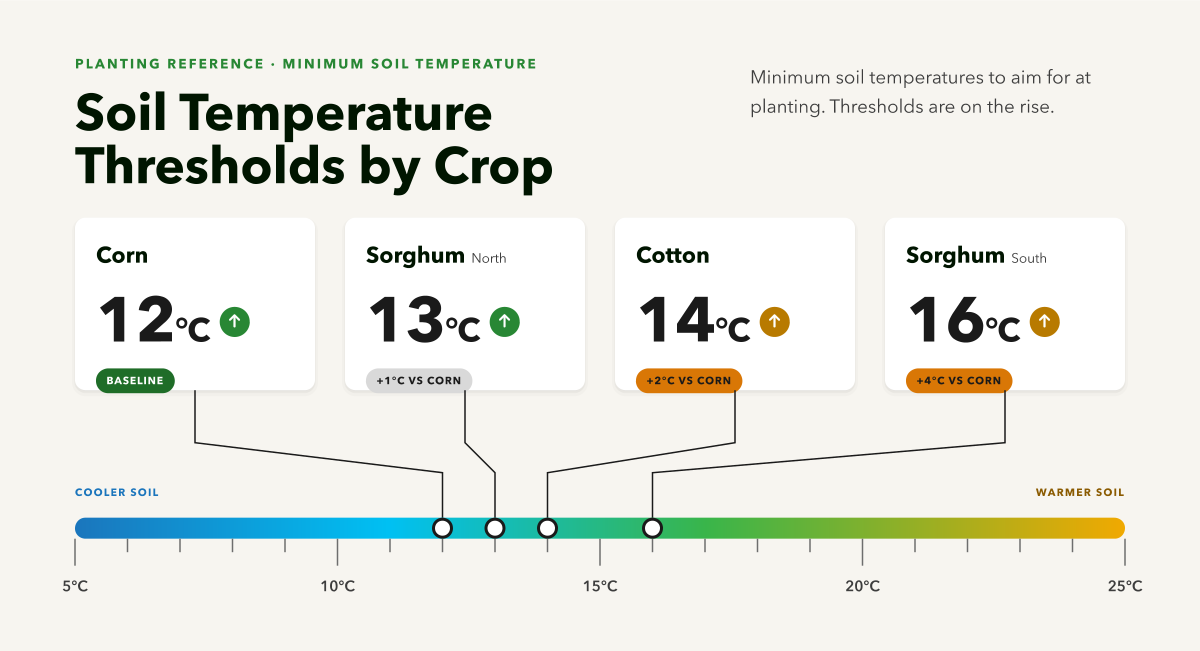
Corn generally performs best when soil temperatures are around 12°C and rising. Look for a warming trend rather than just one suitable reading. Sowing into a soil profile that is cooling can result in slow and uneven emergence.
Early Nutrition Requirements
Phosphorus remains a key starter nutrient, while zinc can often be a limiting factor, particularly in alkaline and heavier clay soils. Getting phosphorus and zinc available to the developing root system early can help encourage the root growth needed to chase moisture deeper into the profile before the real summer heat arrives.
Corn’s early phosphorus uptake is small in total, but the seedling’s ability to access phosphorus in the first few weeks has a big bearing on early root growth and vigour. Cool soils slow both root growth and the movement of phosphorus to the root, so early-sown corn is often most at risk of a phosphorus-limited start. Purpling of young leaves in a cool spring is a common sign.
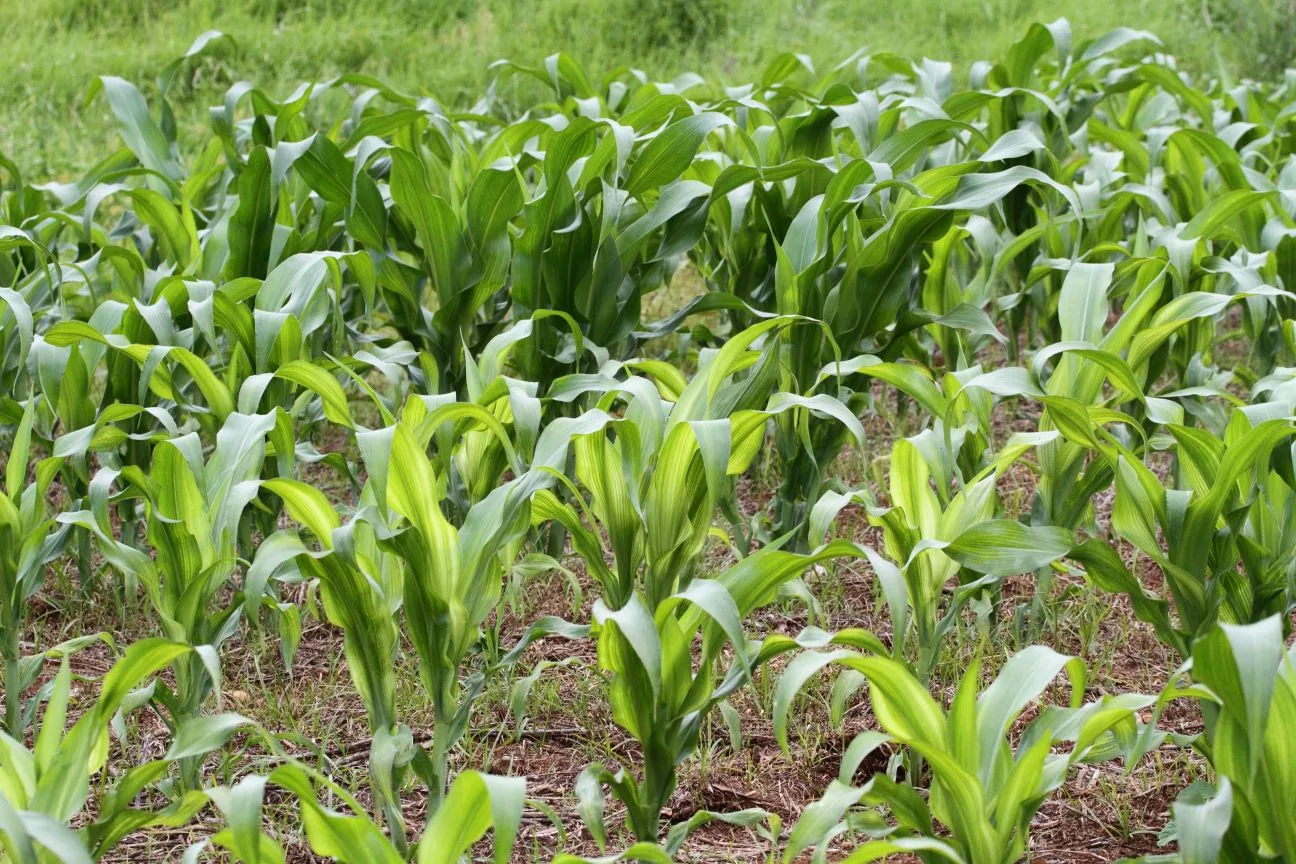
Zinc deficiency in young corn typically shows as pale striping or broad whitish bands either side of the midrib on emerging leaves. Paddocks coming out of a long fallow carry a higher risk, as low levels of mycorrhizal (AM) fungi reduce the plant’s ability to take up both phosphorus and zinc — commonly referred to as long fallow disorder.
Early nitrogen demand is modest compared with what comes later, but the seedling still needs access to some nitrogen before the main uptake period from around V6. Having nitrogen available in the root zone early, without placing too much close to the seed, helps keep the crop moving.
Sorghum
Sowing Window
Sorghum wants warmer conditions than corn. Aim for soil temperatures around 13°C in the North and 16°C in the south and rising. Sorghum is less forgiving of cold, wet conditions and can be more susceptible to establishment problems when soils remain cool.
Early Nutrition Requirements
Sorghum develops a fibrous root system quickly under warm conditions, but phosphorus and zinc are particularly important while those roots are still shallow. An uneven start can mean uneven plant development, which can ultimately translate into differences in head size and harvest timing.
Sorghum’s small seed carries limited reserves, so the seedling becomes reliant on soil nutrients soon after emergence. Phosphorus supports early root and tiller development, while zinc deficiency is common on the alkaline cracking clays of northern NSW and southern Queensland and can show as pale interveinal striping on young leaves.
Sorghum also relies on mycorrhizal fungi to help take up phosphorus and zinc, so paddocks coming out of a long fallow or following a non-host crop such as canola deserve extra attention to early phosphorus and zinc supply.
Nitrogen demand builds quickly from panicle initiation, but early nitrogen supports leaf area and tiller development, so having some readily available nitrogen in the root zone from the start is valuable.

Cotton
Sowing Window
Cotton is probably the least forgiving of the three when it comes to cold soils. A minimum soil temperature of around 14°C at 9am, together with a five-day forecast showing temperatures trending warmer, is a good discipline to follow.
Aim to sow into good moisture and be particularly mindful of paddocks with a history of seedling disease.
Pythium, Rhizoctonia and Fusarium can all create significant establishment issues in cotton, making the seed treatment package an important part of the overall sowing strategy.
Early Nutrition Requirements
Cotton has relatively limited nutrient reserves in the seed compared with the demands of rapid early growth. Phosphorus and zinc can support early taproot development, while biological seed treatments can help improve germination speed and reduce the time seedlings are exposed to challenging conditions.
Cotton is highly dependent on mycorrhizal (AM) fungi for phosphorus and zinc uptake, making it one of the crops most affected by long fallow disorder. After a long fallow or a non-host crop, getting phosphorus and zinc close to the developing taproot becomes even more important.
Nitrogen and potassium demand is relatively small in the first few weeks but climbs rapidly from squaring. A vigorous early root system puts the crop in a better position to access those nutrients as demand increases through the season.

Don’t Overlook what is Happening Around the Seed
Getting the seed into the right conditions is only part of the equation. In the first few days after germination, the developing root system is still small and has limited access to nutrients in the surrounding soil.
This is where seed-applied and in-furrow nutrition, along with biological seed treatments, can add value. The aim isn’t to replace a good fertiliser program. It is about making sure the seedling has access to the nutrients and support it needs during those critical early stages.
-

Active PRIME™
The nutrient content in Active PRIME™ helps improve germination with significantly greater root growth for hardier seedlings.
-

Active PLS™
Active PLS™ improves germination, early growth, and the efficiency of biological nitrogen fixation (BNF) for legumes.
-

Active INFURROW™
Active INFURROW™ delivers nutrients directly to the root zone to stimulate early germination, better root growth and stronger plants.
Where Does Active PRIME Fit?
Active PRIME is a seed coating designed to support faster establishment, early root development and more uniform crop emergence.
Active PRIME™ combines 5-8-5 nutrition with micronutrients and Intrinsic® technology, delivering phosphorus, potassium and zinc directly to the seed along with biological activation compounds.
The focus is simple — give the seedling the tools it needs to get moving early and build a strong root system.
During the first few days after germination, the developing root system is small and has limited access to nutrients held in the surrounding soil. This is where placing nutrition and biological support directly on the seed can make a difference.
The combination of readily available nutrition and Intrinsic® technology is designed to support germination, early root development and plant establishment, helping the seedling move more quickly through those critical early stages.
Active PRIME™ isn’t designed to replace a good fertiliser program or good agronomy. Instead, it works alongside the existing seed treatment and nutrition program to help front-load early crop development.
It is also designed to fit into existing seed treatment programs and can be used alongside standard fungicide, insecticide and biological seed treatments.
Faster Emergence
Stronger Roots
Crop Consistency
What is Intrinsic®?
Intrinsic® is a synthetic biostimulant technology incorporated into both Active PRIME and Active INFURROW. It works at the plant cellular level, influencing processes involved in plant growth, root development and stress response.
During early establishment, the seedling is going through a period of rapid change. The first roots are developing, the plant is moving from its seed reserves to relying on the surrounding soil, and it needs to establish an active root system capable of accessing water and nutrients.
This is where Intrinsic® can play an important role.
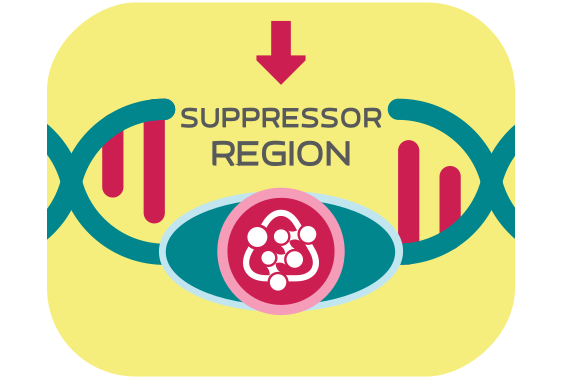
Intrinsic® influences plant processes by interacting with proteins involved in regulating gene activity. The technology is designed to promote beneficial plant functions while helping to suppress stress-related responses. This includes supporting natural root-promoting processes, cell development and the plant’s ability to manage stress during early growth.
For the developing seedling, stronger root growth means a greater opportunity to access nutrients and water from the surrounding soil. Intrinsic® also supports root activity and nutrient uptake, helping the plant make better use of the nutrition available during this critical establishment period.
This is particularly important when conditions are less than ideal. Cool soils, variable moisture, early-season stress or a slow start can all limit how quickly a young plant develops. Supporting the plant’s natural growth processes during this period can help it establish a stronger root system and maintain growth as it moves into the next stage of development.
The important point for growers is that Intrinsic® isn’t replacing good agronomy. Soil temperature, moisture, seed-to-soil contact, nutrition and correct placement still come first. Intrinsic® is designed to work alongside those fundamentals.
In Active PRIME, Intrinsic® is combined with seed-applied nutrition, putting both the nutrient package and biostimulant directly with the seed as it begins to germinate. With Active INFURROW, Intrinsic® is delivered with nutrition into the developing root zone, supporting the plant as the roots begin to explore the surrounding soil.
So while the two products deliver nutrition in different ways, they both use Intrinsic® technology to support the plant during the critical early establishment phase.
A strong start is about more than simply getting the seed to emerge. It is about establishing an active root system, accessing nutrition and water early, and helping the plant continue growing when conditions aren’t perfect.






Where Does Active INFURROW™ Fit?
Where Active PRIME™ puts nutrition on the seed, Active INFURROW™ delivers nutrition into the root zone at sowing. It is a liquid in-furrow product designed to stimulate early germination, better root growth and stronger plants.
Active INFURROW™ supplies nitrogen, phosphorus and potassium together with zinc, manganese, iron and boron (4.69% N, 8.2% P, 4.7% K, 1.13% Zn and 1.0% Mn w/v). Its micronutrients are chelated to help keep them available in cold soils during early establishment.
That makes it a good fit for the situations covered above — early-sown paddocks, cooler soils and long fallow country — where the seedling’s ability to access phosphorus and zinc from the soil is most limited.
Active INFURROW™ is applied at sowing at 0.5–1.2 L/ha in a minimum of 100 L/ha of water, in a band around 5 cm from the seed. It is compatible with most fertilisers and crop protection products, but a jar test is recommended for any new tank mix. As with any fertiliser placed near the seed, over-application can harm germination, so stick to label rates.
Used together, Active PRIME™ and Active INFURROW™ give the crop two layers of early nutrition: nutrients on the seed from the moment it germinates, and a band of nutrition that the developing roots grow into over the following weeks.
Root Zone Nutrition
Cold Soil Performance
Stronger Starts
Getting More from Your Nitrogen at Summer Crop Sowing
When we talk about nitrogen efficiency, it’s easy to focus on getting the rate right. But applying the right amount of nitrogen is only part of the equation — we also need to think about keeping that nitrogen available to the crop.
Summer cropping can present some pretty challenging conditions for nitrogen. Warm soils, moisture, irrigation and rainfall can all influence how quickly nitrogen moves through the soil and how much is ultimately available to the plant.
This is where nitrogen stabilisers can play an important role.
The key is understanding that NBPT and DMPP work differently, so choosing the right stabiliser comes down to understanding where your biggest nitrogen-loss risk is.
NBPT – Managing Volatilisation
NBPT is a urease inhibitor. It slows the conversion of urea after application, helping to reduce the risk of nitrogen being lost as ammonia before the urea has a chance to move into the soil.
This makes NBPT particularly useful where urea is being surface applied or broadcast, especially when there may be a delay before rainfall or irrigation incorporates the nitrogen.
For example, if you’re applying urea ahead of a summer crop and the forecast rainfall is uncertain, adding NBPT can give you a greater window for that nitrogen to be incorporated before significant volatilisation occurs.
Think NBPT when the main risk is nitrogen sitting at the surface and being lost to the atmosphere.

DMPP – Managing Nitrification
DMPP works further along the nitrogen cycle. Rather than slowing the initial conversion of urea, it slows the conversion of ammonium into nitrate.
Why does that Matter?
Nitrate is more mobile in the soil and is more susceptible to losses through leaching and denitrification. Keeping more nitrogen in the ammonium form for longer can therefore be beneficial where conditions favour these losses.
DMPP can be particularly useful where nitrogen is incorporated or banded, and where there is good soil moisture or a higher likelihood of significant rainfall or irrigation following application.
This can be especially relevant in summer cropping systems where heavy rainfall or irrigation can move nitrate below the active root zone, or where waterlogged conditions create a risk of denitrification.
Think DMPP when the bigger risk is nitrate moving away from where the crop can use it.
What about Using Both?
Sometimes there isn’t just one risk.
If nitrogen is going onto the soil surface, conditions are warm, and there is also the potential for significant rainfall or irrigation after application, there can be more than one opportunity for nitrogen loss.
This is where a dual stabiliser containing both NBPT and DMPP can make sense.
The two products work at different points in the nitrogen cycle — NBPT helps manage the risk of ammonia volatilisation, while DMPP slows nitrification and can help manage subsequent nitrate losses.
It isn’t about saying that dual is always better. It’s about looking at the conditions and asking:
What is the biggest risk to the nitrogen I’m applying?
Matching the Stabiliser to the Conditions
| WHAT ARE YOU SEEING? | CONSIDER |
| Urea sitting on the soil surface | NBPT |
| Warm conditions and delayed rainfall/irrigation | NBPT |
| Surface-applied or broadcast urea | NBPT |
| Nitrogen incorporated or banded into moist soil | DMPP |
| High rainfall or irrigation following application | DMPP |
| Higher risk of leaching or denitrification | DMPP |
| Potential for both volatilisation and nitrate losses | NBPT + DMPP |
There is no one-size-fits-all approach to nitrogen stabilisation.
Rate, timing, placement, soil type, moisture and the weather following application all matter.
The aim is to make every kilogram of nitrogen work harder for the crop — not simply by applying more nitrogen, but by protecting the nitrogen you have already paid for and keeping it available when the crop needs it.
For summer crops, that can make a real difference to nitrogen-use efficiency and the return on your fertiliser investment.
And one final point — nitrogen stabilisers don’t remove the risk of seedling damage. Any nitrogen placed in-furrow or close to the seed still needs to be within safe rates for the crop. A stabiliser can help protect nitrogen from environmental losses, but it doesn’t change the salt injury risk from placing too much fertiliser too close to the seed.
-

ARM U™ 16% DMPP
A liquid additive for urea and UAN fertilisers that reduces nitrogen loss by inhibiting nitrification.
-

ARM U™ 28% NBPT
A liquid fertiliser additive that controls ammonia volatilisation from urea and urea ammonium nitrate (UAN) fertilisers.
-
Active STABILIZER™ PLUS 20-3
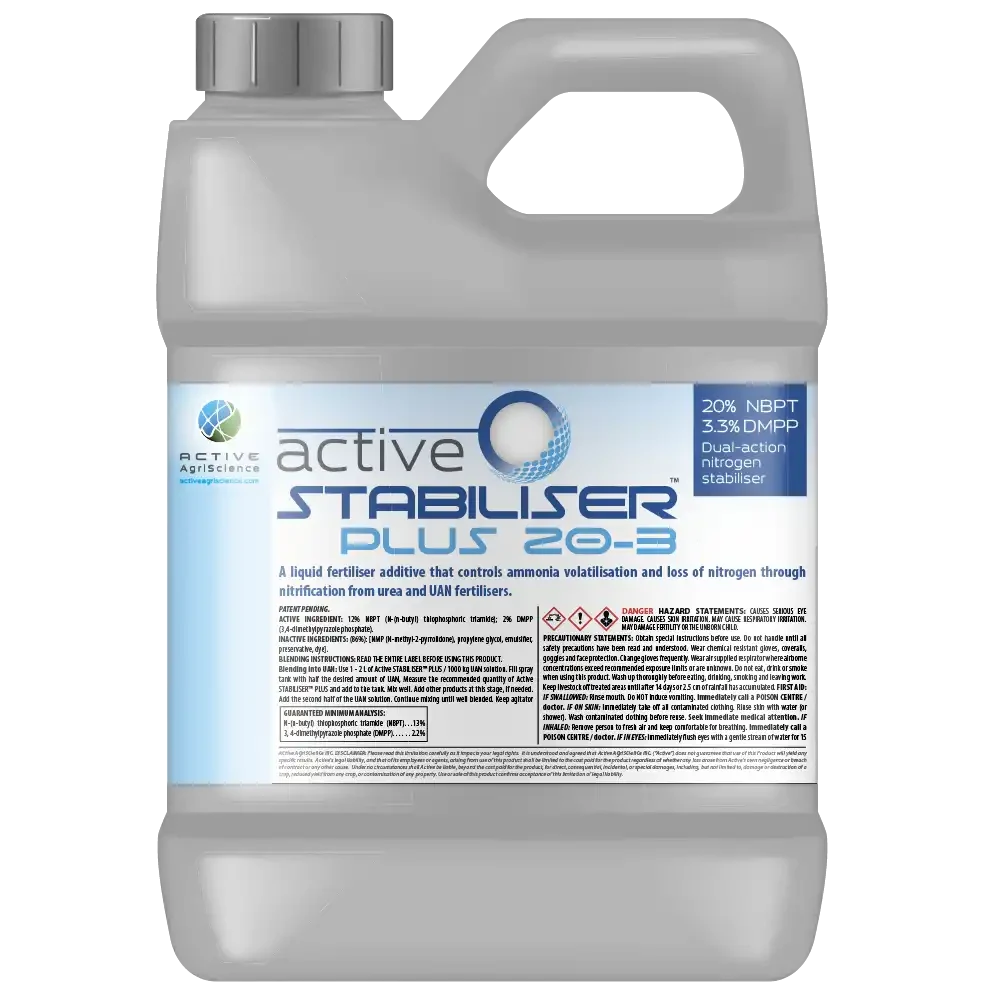
Active STABILIZER™ PLUS 20-3 is a dual-action nitrogen saving technology that inhibits both ammonia volatilisation and nitrification/denitrification.
The Bottom Line
A strong summer crop starts well before the crop reaches the first major growth stage.
- Get the sowing window right — make sure soil temperature and moisture are suitable for the crop rather than simply chasing the calendar.
- Give the developing root system access to nutrition — phosphorus and zinc are particularly important during early establishment when roots are still small.
- Put nutrition where the roots will find it — an in-furrow product such as Active INFURROW™ places phosphorus, zinc and other nutrients in a band near the seed at sowing, supporting the crop while the root system is still small.
- Support germination and early root development — seed treatments such as Active PRIME™ and Intrinsic® technology can be layered into an existing seed treatment program to help support early establishment.
- Protect the nitrogen you’ve already invested in — where urea is being applied around sowing and incorporation isn’t guaranteed, NBPT can help reduce volatilisation losses.
There is no silver bullet for establishment. Good paddock preparation, the right sowing conditions and sound agronomy still come first.
But getting the small things right early can make a big difference to how the crop handles everything that comes later.
A strong start gives the crop more opportunity to reach its yield potential.
