
Crop establishment is a critical determinant of yield potential in broadacre farming systems. The physiological processes that occur during germination and early seedling development directly influence root architecture, nutrient uptake efficiency, stress tolerance, and ultimately grain yield. Seed nutrition plays a key role in supporting these early-stage processes by ensuring essential nutrients are available at the point of demand.

On this page
The Importance of Early-Stage Nutrition
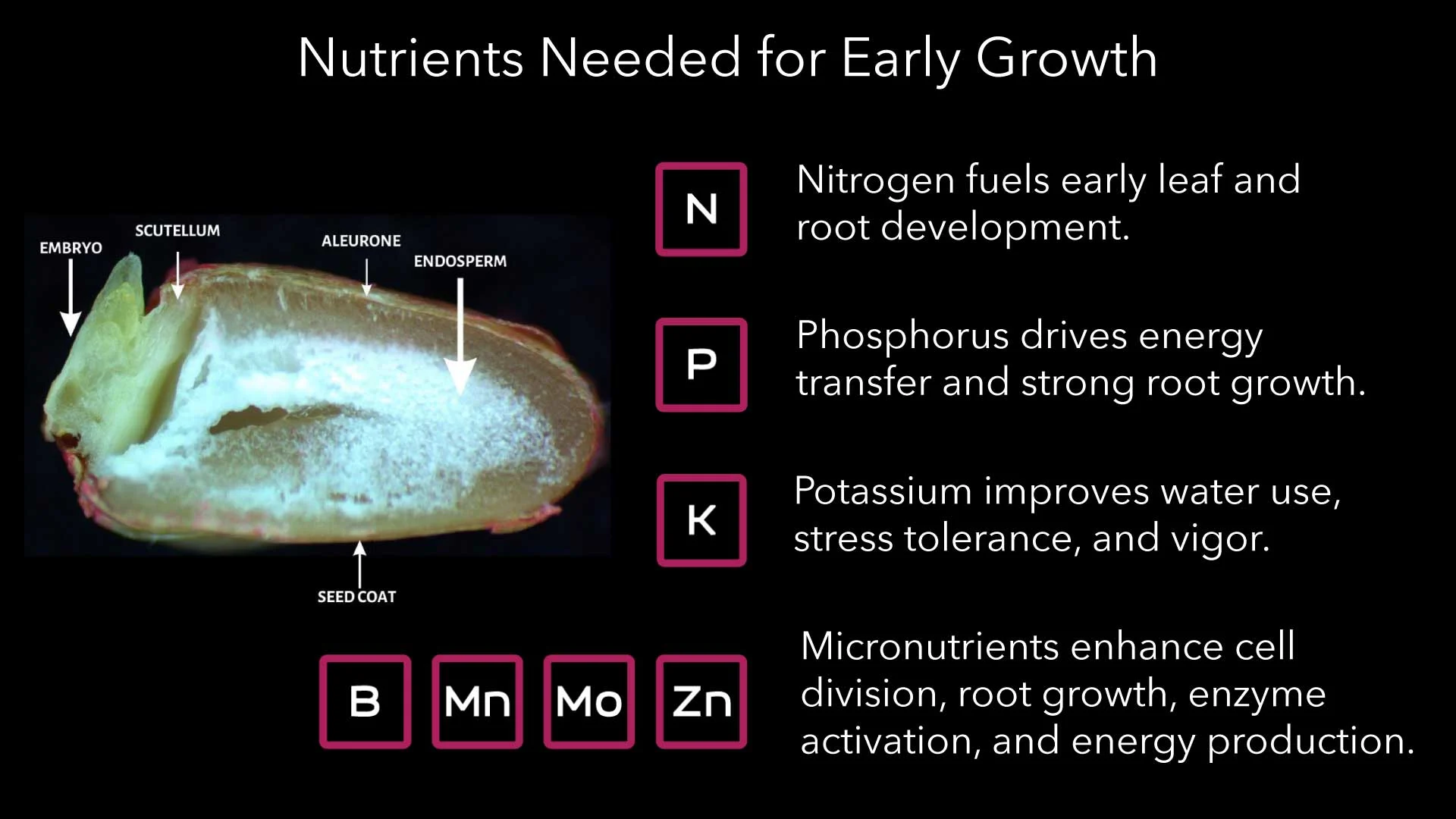
During germination and early emergence, seedlings have limited root systems and restricted access to soil nutrients. Nutrient availability during this phase governs cell division, enzyme activation, energy transfer, and early root elongation. Deficiencies at this stage can result in poor vigour, delayed emergence, and reduced yield potential that cannot always be recovered later in the season, even with optimal in-crop fertiliser management.
Seed-applied nutrition addresses this limitation by placing nutrients directly in the seed zone, improving nutrient use efficiency and supporting early crop establishment under a wide range of soil and seasonal conditions.

Nutrient Requirements at Germination
Successful early growth requires a balanced supply of macronutrients, particularly nitrogen (N), phosphorus (P), and potassium (K), as well as essential micronutrients including zinc (Zn), manganese (Mn), and boron (B).
Phosphorus is especially critical during early growth due to its role in energy transfer (ATP), root development, and tiller initiation. Zinc supports enzyme function and hormone regulation, while manganese plays a role in photosynthesis and nitrogen metabolism. Boron is essential for cell wall formation and meristem development.
Seed-applied formulations ensure these nutrients are immediately available to the emerging seedling, reducing reliance on soil nutrient mobility and availability during early growth.
Seed-Applied Nutrition Technologies
Modern seed nutrition products such as Active AgriScience’s Active PRIME™ 5-8-5 + micros and Active PLS™ 2-5-10 + micros have been developed to deliver targeted nutrient blends at low application rates. These products contain balanced nutrient ratios designed to align with early crop demand.
Active INFURROW™ 5-8-5 + micros is an alternative to seed dressing for those with liquid carts.
In addition to nutrients, these formulations include bioactive compounds that promote germination uniformity, root elongation, and early biomass accumulation.
-

Active PRIME™
The nutrient content in Active PRIME™ helps improve germination with significantly greater root growth for hardier seedlings.
-

Active PLS™
Active PLS™ improves germination, early growth, and the efficiency of biological nitrogen fixation (BNF) for legumes.
-

Active INFURROW™
Active INFURROW™ delivers nutrients directly to the root zone to stimulate early germination, better root growth and stronger plants.
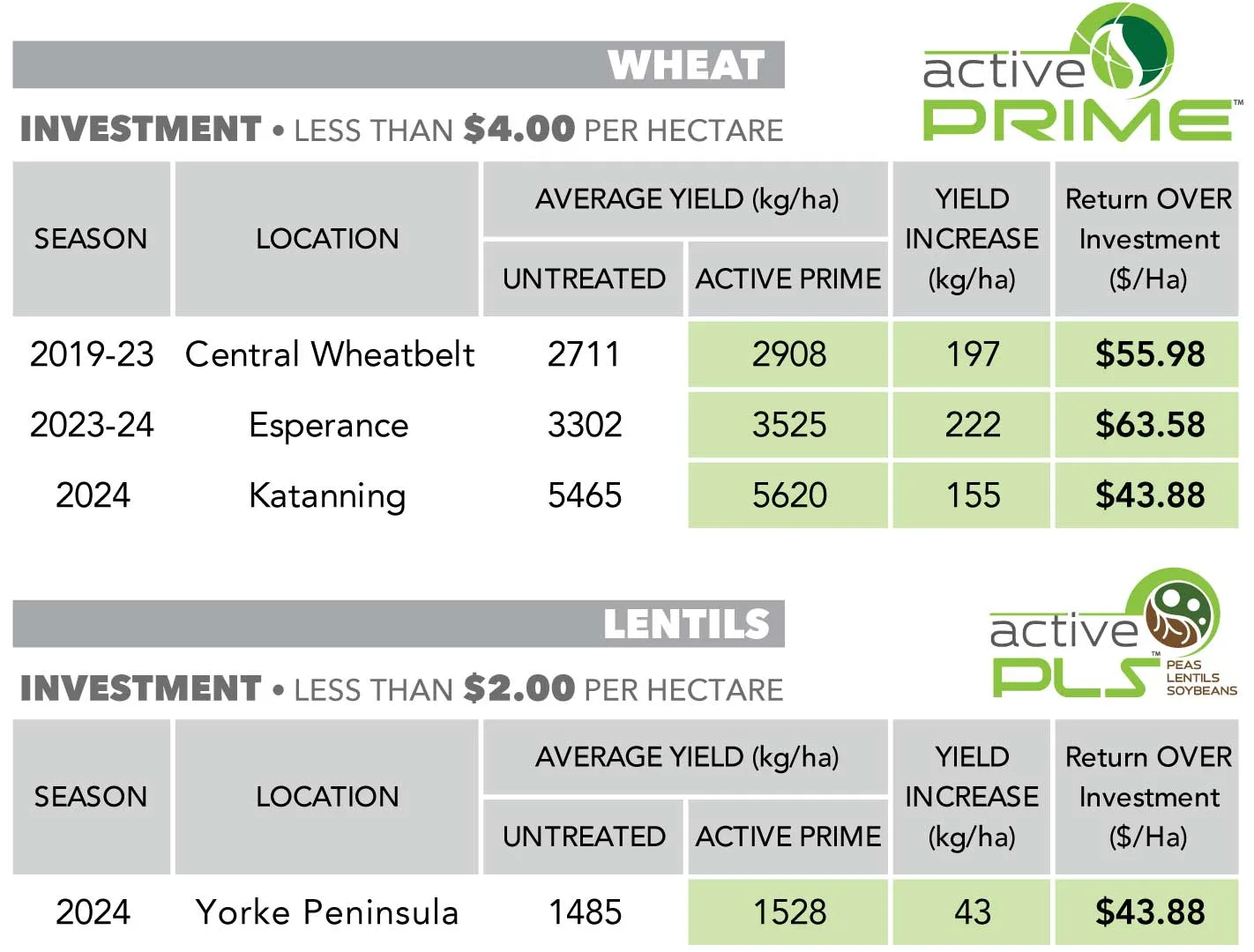
Field trials conducted across Australian broadacre cropping systems have demonstrated consistent yield responses across cereals and pulses.
Measured yield increases of up to 222 kg/ha in wheat and 43 kg/ha in lentils have been recorded, delivering returns on investment exceeding $40 per hectare from an input cost of only a few dollars per hectare.
Compatibility and Application Efficiency
For seed-applied nutrition to be effective at scale, compatibility with existing seed treatments is essential. Products such as Active PRIME™ and Active PLS™ are designed to be compatible with common fungicides, insecticides, and rhizobia inoculants, without compromising seed flowability or coating uniformity.
Their free-flowing nature and low application volumes make them suitable for commercial-scale seed treatment systems and on-farm application, minimising operational complexity during seeding.
Stress Mitigation and Early Crop Resilience
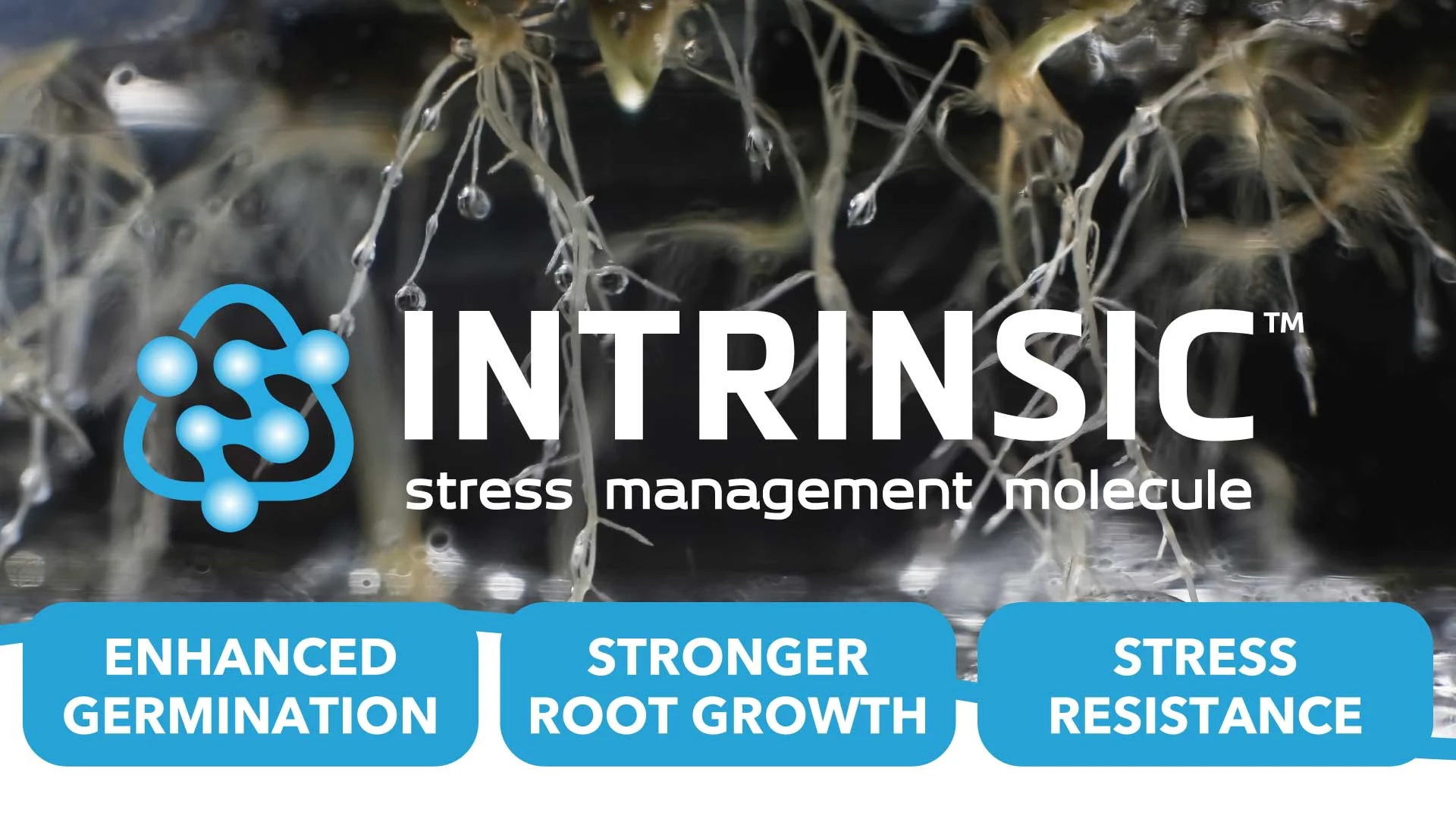
Beyond nutrient supply, advanced seed nutrition formulations may include stress management compounds, such as Intrinsic™, which support early plant resilience under abiotic stress conditions. These compounds assist seedlings in managing oxidative stress, improving tolerance to moisture stress and temperature variability during establishment.
Enhanced early root development and nutrient uptake capacity further contribute to improved crop stability in variable seasonal conditions.
Conclusion
Seed nutrition is a technically sound and economically efficient strategy to support early crop establishment in broadacre farming systems. By delivering essential nutrients directly to the seed and emerging root zone, seed-applied nutrition improves nutrient use efficiency, early vigour, and yield potential. Seed nutrition represents a practical addition to integrated crop nutrition programs. It is a low-cost intervention that delivers measurable agronomic and financial benefits by ensuring crops establish strongly from the outset.
