
Getting tank mixes right is one of the simplest ways to protect product performance, avoid compatibility issues, and ensure every pass across the paddock delivers value. Whether you’re applying herbicides, foliar nutrition, plant growth regulators, or biologicals, the fundamentals remain the same: clean water, correct order, stable pH, and good agitation. For Australian growers working across variable water quality, tight spray windows, and increasingly complex tank mixes, following a disciplined mixing sequence is essential.

On this page
Tank Mixing Order: Why Sequence Matters
A reliable rule of thumb is to add products from dry to wet, from heavy to light, and from least to most reactive. In practice, that means starting with clean water and conditioners, then moving through dispersible granules (WG, DG), wettable powders (WP), soluble liquids (SL), suspension concentrates (SC), emulsifiable concentrates (EC), and finishing with adjuvants or biologicals. This order prevents clumping, settling, foaming, and antagonism between chemistries — all common headaches in broadacre setups. It also ensures foliar nutrition products — including Active AgriScience Australia’s range is disperse evenly, allowing them to integrate smoothly with herbicides, fungicides, and other foliar inputs used in broadacre rotations.

How INTRINSIC™ Helps Crops Handle Stress in Mixed Sprays
One of the advantages of using Active AgriScience foliar products in broadacre systems is the inclusion of INTRINSIC™, a proprietary plant‑bioactivation technology designed to support crop resilience under stress. When foliar nutrition is applied alongside herbicides, fungicides, or insecticides, crops can experience short‑term physiological pressure — often seen as slowed growth, transient yellowing, or reduced metabolic activity. INTRINSIC™ helps buffer this response by stimulating early metabolic pathways, improving nutrient assimilation, and supporting the plant’s natural stress‑mitigation mechanisms. This means crops maintain stronger photosynthetic activity and recover faster after exposure to crop protection chemistry. In practical terms, when Active Build, Active Flower, or Active Grainfill are included in a tank mix, INTRINSIC™ helps the plant stay “switched on,” reducing the downtime typically associated with herbicide or pesticide applications and supporting more consistent growth across broadacre cereals, canola, pulses, and fodder crops.

Spray Timing for Maximum Performance
Timing is just as critical as order. Foliar nutrition and biological stimulants perform best when applied during periods of active plant uptake — typically early morning or late afternoon when stomata are open and temperatures are moderate. Herbicides, on the other hand, often demand specific environmental windows to avoid volatilisation, drift, or reduced efficacy. Aligning these requirements means planning ahead: checking Delta T, monitoring wind speed, and ensuring water rates are high enough to achieve coverage without compromising droplet size. For foliar products like Active Build, formulated for rapid leaf absorption, targeting cooler parts of the day maximises uptake and reduces the risk of leaf burn — especially in hay, silage, and cereal systems where crop quality and uniformity matter.
Finally, always conduct a jar test when working with unfamiliar combinations, and keep agitation running throughout mixing and spraying. As tank mixes become more complex across Australian broadacre systems, following a consistent mixing order and timing strategy ensures every product — from herbicides to foliar nutrition — performs as intended, protecting both yield and return on investment.
Active AgriScience Foliar Nutrients
-

Active FLOWER™
The nutrient content in Active FLOWER™ helps enhance pollen development, anther dehiscence, pollen hydration, fertilisation, and production of fruit, pods and seeds.
-
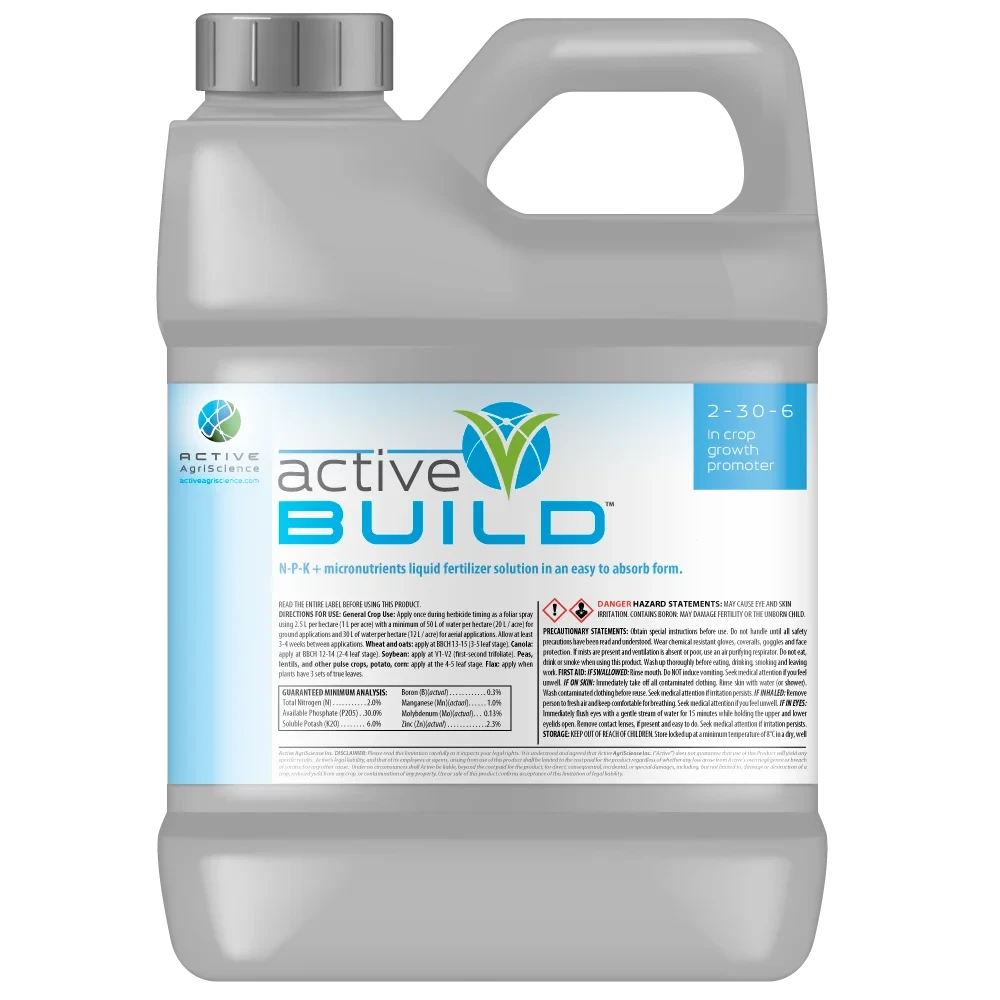
Active BUILD™
The nutrient content in Active BUILD™ helps promote growth above and below ground while protecting young plants from stressors.
-

Active GrainFILL™
The nutrient content in Active GrainFILL™ optimizes grain size and weight by improving nutrition and extending the grain fill period.


