
Australian growers operate in one of the most variable production environments in the world. Rainfall uncertainty, rising input costs, declining soil organic matter, and increasing pressure to reduce emissions are reshaping how nutrients are managed across broadacre, pasture, and fodder systems. Sustainable fertiliser use is no longer about cutting nutrients, it’s about applying them in ways that maximise plant uptake, protect soil function, and deliver long‑term productivity.
A major shift underway is the move toward nitrogen efficiency, supported by stabilised N technologies that reduce losses and improve plant availability. Active AgriScience’s stabiliser range — ARM U® 28%, ARM U® 16% DMPP, and Active STABILIZER™ PLUS, all powered by INTRINSIC™ technology — helps growers reduce volatilisation, slow nitrification, and keep more nitrogen in the soil profile for longer. These stabilisers support stronger establishment, more consistent tillering, and improved return on fertiliser investment.
 |
 |
 |
| ARM U 28% NBPT | ARM U 16% DMPP | Active STABILIZER PLUS 20-3 |
|---|---|---|
| 28% NBPT | No NBPT | 20% NBPT |
| No DMPP | 16% DMPP | 3.3% DMPP |
| 2 L / tonne of urea | 0.6 L / tonne of urea | 2 L / tonne of urea |
| 1.5 L / tonne of UAN | 0.35 L / tonne of UAN | 1.5 L / tonne of UAN |
| Inhibits ammonia volatilisation | Inhibits nitrification | Inhibits ammonia volatilisation and nitrification |
On this page
Nitrogen Efficiency: The Foundation of Sustainable Fertiliser Use
Nitrogen losses remain one of the biggest inefficiencies in Australian agriculture. High pH surface layers, warm temperatures, and light‑textured soils create ideal conditions for volatilisation, leaching, and denitrification. With urea prices remaining volatile and environmental expectations increasing, improving nitrogen‑use efficiency (NUE) is both an economic and sustainability priority.
Why Stabilised Nitrogen Matters
Stabilised nitrogen products protect N during the vulnerable early weeks after application, reducing exposure to loss pathways and improving the proportion of applied N that reaches the crop. This leads to:
- Higher Nitrogen Use Efficiency (NUE)
- Reduced ammonia and nitrous oxide emissions
- More consistent early vigour and tillering
- Improved yield per unit of nitrogen applied
- Lower environmental footprint per tonne of grain or fodder
INTRINSIC™ technology adds another layer of value by supporting the plant’s natural stress‑mitigation pathways, helping crops maintain stronger metabolic activity during and after fertiliser or crop protection applications.

Urea Treatments: Chemistry, Performance, and Sustainability
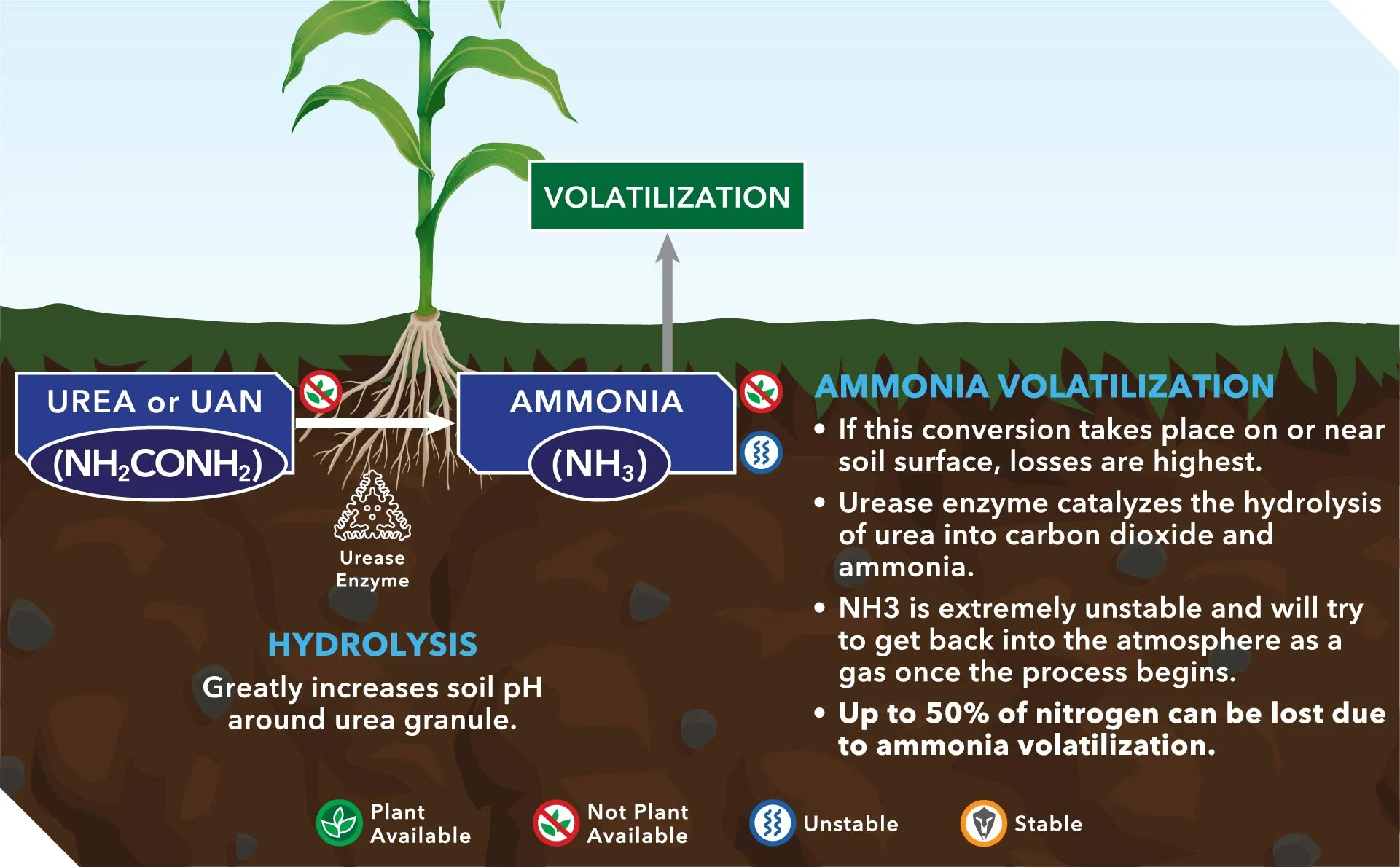
Urea remains the dominant nitrogen source in Australia, but untreated urea is highly vulnerable to loss. Sustainable fertiliser practice increasingly relies on treated urea products that protect nitrogen from the moment it hits the soil surface.
NBPT – Urease Inhibitor
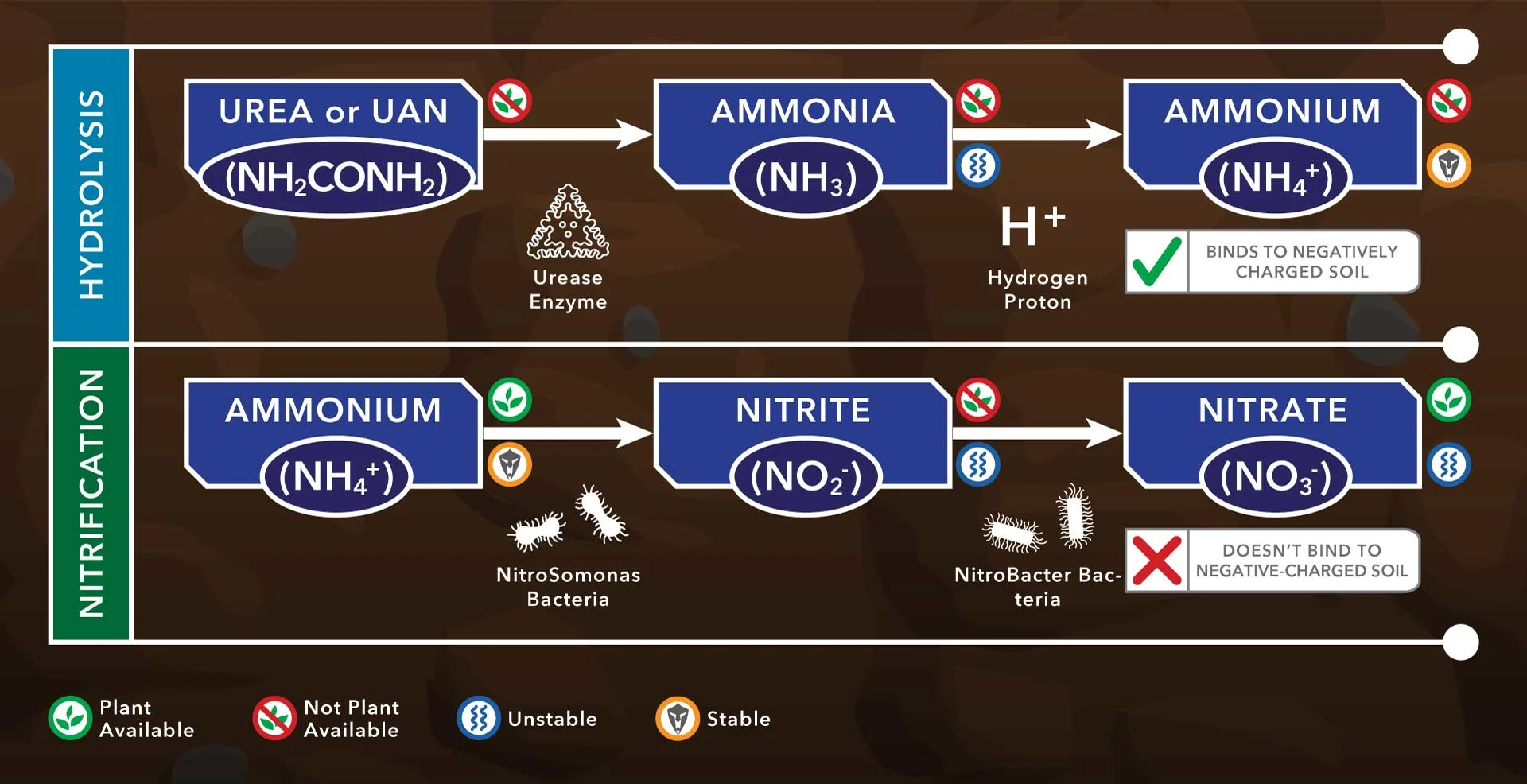
- Slows the urease enzyme
- Reduces volatilisation losses
- Extends the rainfall window from 2–3 days to 21 days
- Improves performance on high pH or calcareous soils
DMPP – Nitrification Inhibitor
- Slows conversion of ammonium to nitrate
- Reduces leaching and denitrification
- Ideal for sandy soils, high‑rainfall zones, and irrigated systems
Dual‑action protection
Products combining NBPT + DMPP provide full‑pathway protection, reducing both volatilisation and soil losses. This dual approach supports higher NUE, lower emissions, and more reliable crop response.
Stabilisers in Waterlogged, Irrigated, and Pasture Systems
Waterlogged soils, irrigated paddocks, and intensively grazed pastures present unique nitrogen‑loss challenges. In these environments, nitrification inhibitors such as DMPP become especially valuable, as they slow the conversion of ammonium to nitrate — the form most vulnerable to leaching and denitrification.
Why Stabilisers Matter in Wet or Irrigated Conditions
When soils become saturated:
- Oxygen levels drop
- Microbial activity shifts
- Nitrate is rapidly converted to nitrous oxide and nitrogen gas
- Losses can exceed 30–50% of applied N in severe cases
By keeping nitrogen in the ammonium form for longer, DMPP reduces the pool of nitrate available for loss, improving both NUE and environmental outcomes.

Benefits in Irrigated Systems
In irrigated cotton, cereals, and pasture:
- Frequent irrigation cycles increase nitrate movement
- Ammonium retention improves root‑zone N availability
- More consistent crop response is achieved between irrigations
- Lower N rates can often achieve the same yield outcome
Top‑Dressing Pastures
Surface‑applied N in pasture systems is highly vulnerable to both volatilisation and leaching. Stabilised nitrogen provides several advantages:
- NBPT reduces volatilisation from dry or partially moist surfaces
- DMPP reduces nitrate loss following rainfall or irrigation
- Improved N retention supports stronger regrowth and feed quality
- More uniform response across paddocks with variable moisture
This makes stabilised N particularly valuable in dairy, beef, and hay production systems where top‑dressing is frequent and conditions are often unpredictable.
Soil pH Management: A Cornerstone of Fertiliser Efficiency
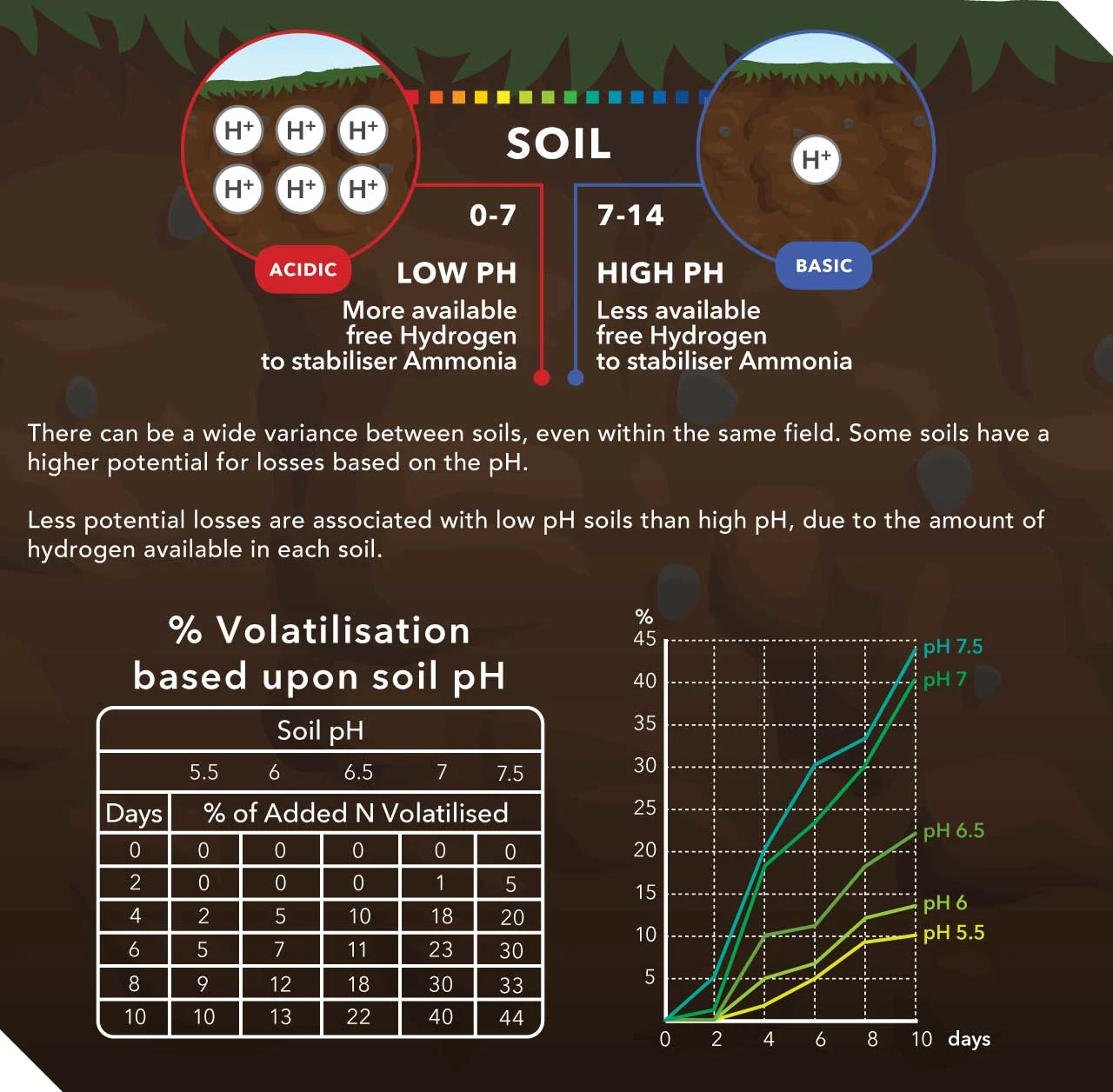
Acidic topsoils — common across southern Australia — restrict nutrient availability and reduce fertiliser responsiveness. Low pH affects root development, microbial activity, and the availability of key nutrients such as phosphorus, molybdenum, calcium, and magnesium.
Sustainable pH management includes:
- Regular soil testing
- Strategic liming
- Balanced nutrient programs
- Avoiding over‑acidifying nitrogen sources where possible
Maintaining optimal pH improves root exploration, water‑use efficiency, and overall nutrient uptake.
Foliar Fertiliser in Broadacre Systems: Precision, Efficiency, and Sustainability
While foliar nutrition has long been used in horticulture, its role in broadacre systems is expanding rapidly as growers look for more efficient, responsive, and sustainable ways to manage nutrients.
Foliar fertilisers allow nutrients to be delivered directly to the leaf, bypassing soil constraints such as:
- pH‑induced nutrient lock‑up
- Dry topsoils
- Low microbial activity
- Nutrient fixation in high‑clay or calcareous soils

Why Foliar Nutrition is Gaining Traction in Broadacre
- Improved nutrient‑use efficiency Foliar applications deliver nutrients at the exact growth stage they are needed, reducing reliance on high upfront granular rates.
- Rapid correction of in‑season deficiencies Crops under stress — heat, moisture, herbicide load — often struggle to access soil nutrients. Foliar nutrition provides an immediate pathway for uptake.
- Lower environmental load Small, targeted foliar doses reduce the risk of leaching, volatilisation, and denitrification.
- Compatibility with modern spray programs Most broadacre growers already run multiple in‑crop passes for weed, pest, and disease control. Adding foliar nutrition to these passes increases efficiency without additional fuel or labour.
Where Foliar Nutrition Delivers the Most Value
- Cereals: early tillering, stem elongation, grain fill
- Canola: rosette stage, early flowering
- Pulses: vegetative growth, pod set
- Hay and silage: density, stem strength, regrowth
Targeted foliar P, K, Ca, and micronutrients support quality, uniformity, and resilience — particularly in fodder systems where crop quality directly determines market value.
-

Active FLOWER™
The nutrient content in Active FLOWER™ helps enhance pollen development, anther dehiscence, pollen hydration, fertilisation, and production of fruit, pods and seeds.
-
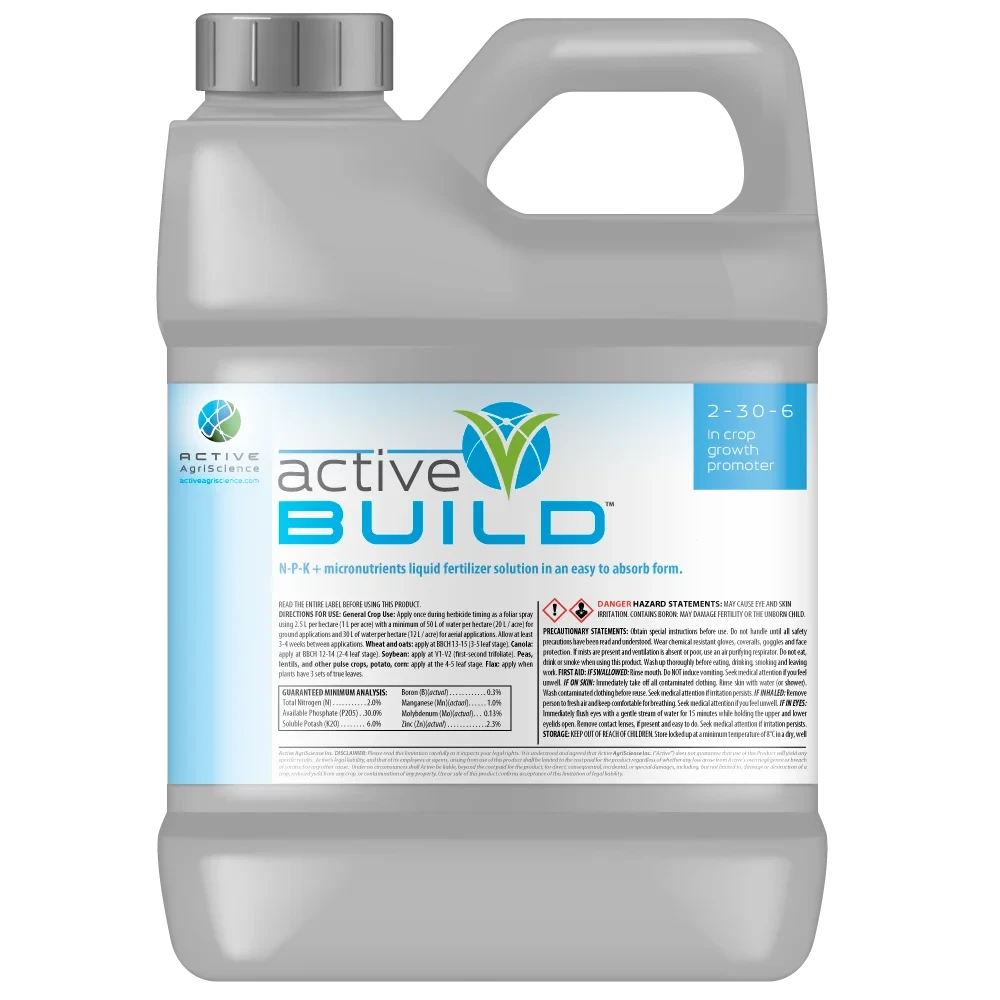
Active BUILD™
The nutrient content in Active BUILD™ helps promote growth above and below ground while protecting young plants from stressors.
-

Active GrainFILL™
The nutrient content in Active GrainFILL™ optimizes grain size and weight by improving nutrition and extending the grain fill period.
Integrated Sustainable Fertiliser Strategies
Sustainable fertiliser practice is ultimately about timing, placement, and integration. The most resilient systems combine:
- Stabilised nitrogen to reduce losses
- Variable‑rate application where possible
- Strategic pH management
- Foliar nutrition for in‑season precision
- Biologicals or organic amendments to support soil function
- Matching nutrient supply to crop demand
When paired with nitrogen stabilisers powered by INTRINSIC™ — including ARM U® 28%, ARM U® 16% DMPP, and Active STABILIZER™ PLUS — growers can significantly reduce nutrient losses while supporting higher productivity.
-

ARM U™ 16% DMPP
A liquid additive for urea and UAN fertilisers that reduces nitrogen loss by inhibiting nitrification.
-

ARM U™ 28% NBPT
A liquid fertiliser additive that controls ammonia volatilisation from urea and urea ammonium nitrate (UAN) fertilisers.
-
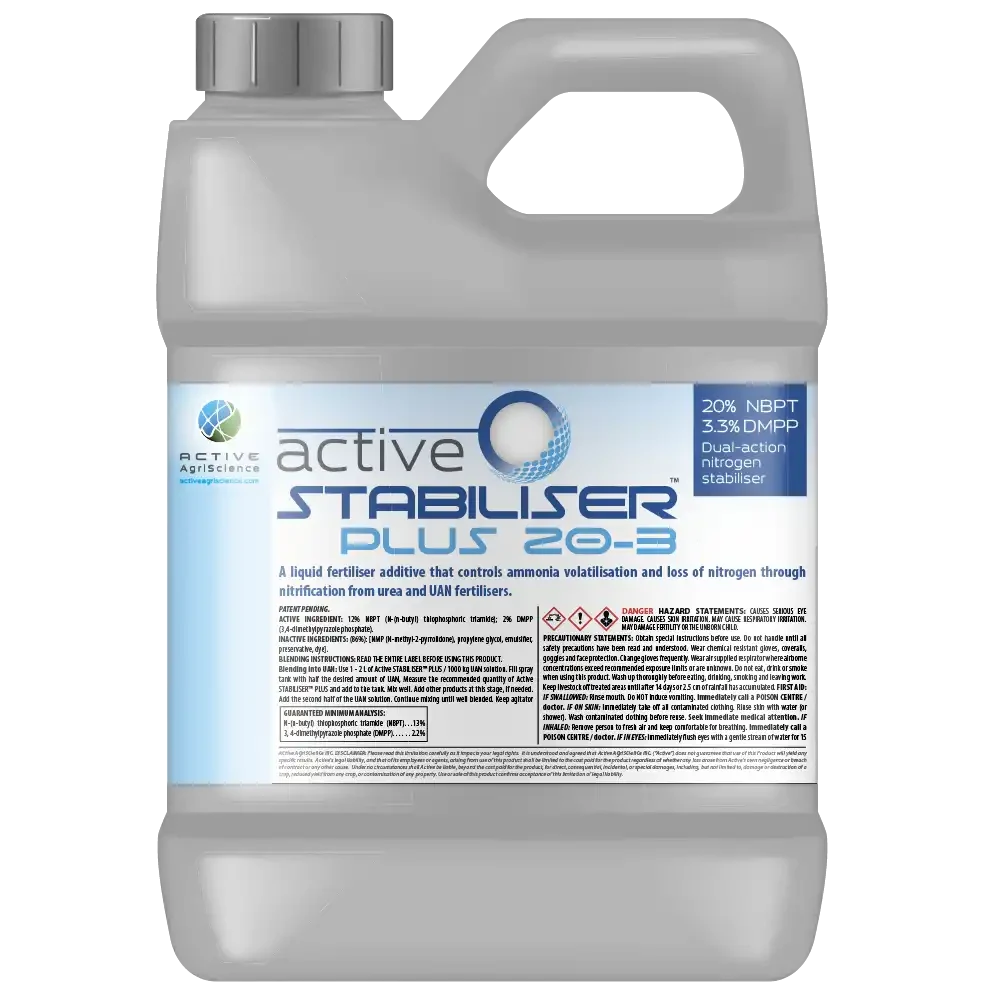
Active STABILIZER™ PLUS 20-3
Active STABILIZER™ PLUS 20-3 is a dual-action nitrogen saving technology that inhibits both ammonia volatilisation and nitrification/denitrification.
Sustainability and Profitability: Moving in the Same Direction
Across Australia, these practices are helping growers lift output while reducing waste — demonstrating that sustainability and profitability are not competing goals. By improving nutrient efficiency, protecting soil health, and reducing environmental losses, growers can build more resilient production systems that perform strongly today and into the future.


